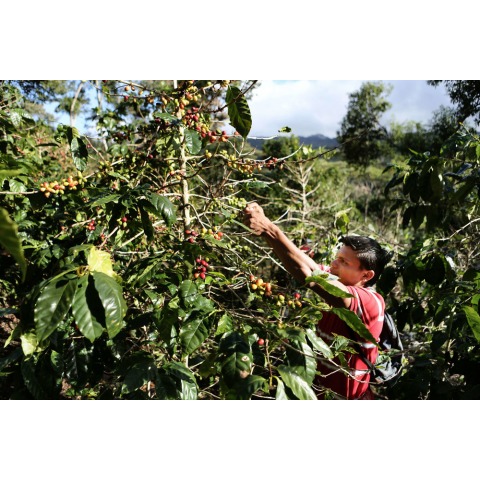
Description
A Distinctive Nicaraguan Variety
Parainema belongs to the Sarchimor (T5296) group, whose history began with research into coffee-leaf-rust resistance at CIFC in Portugal during 1958/59.
Its genetic story starts with the Timor Hybrid, a naturally occurring cross between Arabica and Robusta on the island of Timor. The Robusta parent contributed resistance to coffee leaf rust. Researchers subsequently crossed the Timor Hybrid with the compact Villa Sarchi variety, creating Sarchimor H361.
In 1971, Sarchimor was distributed to research groups in a number of coffee-producing countries at a time when coffee leaf rust was spreading throughout Central America. By 1978, the selection was showing considerable promise as a compact, rust-resistant hybrid and had evolved into what researchers in Costa Rica identified as T5296.
Selections from Costa Rica were subsequently sent to IHCAFE in Honduras, where further generations of selection ultimately produced Parainema.
The result is a variety valued for both yield and cup quality, with its compact growth allowing dense planting. It is resistant to coffee leaf rust and nematodes, and is well adapted to medium-altitude growing conditions.
Washed Processing
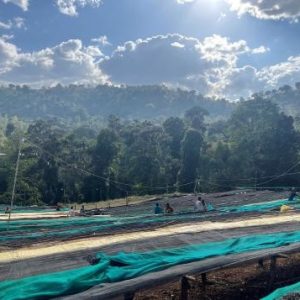
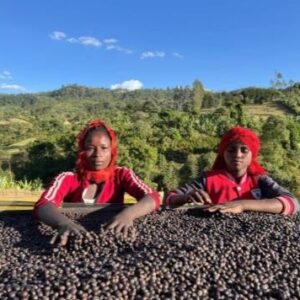
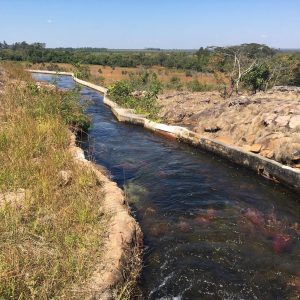
The coffee is classified as washed. In Nicaragua, many producers deliver harvested cherry to a central processing facility such as a mill or cooperative, where the coffee is depulped and fermented in open-air tanks before being washed. The source describes fermentation of approximately 8–12 hours, with coffees generally dried on patios.
Nueva Segovia & Nicaragua
Nicaragua has a long coffee-growing history, traditionally producing varieties including Typica, Bourbon, Caturra and Maragogype. However, relatively low-altitude production in some areas, the remoteness of many small farms and the continuing challenge of coffee-leaf rust have presented obstacles to the country’s development as a recognised premium single-origin.
Today, Nicaragua is increasingly establishing itself as an origin to watch. Coffee remains the country’s most important export, with the source reporting more than $1.2 billion in coffee exports, while approximately 15% of the country’s labour force is involved in the coffee sector in some capacity.
Within Nicaragua, Nueva Segovia is particularly promising. Its higher elevations, together with growing producer interest in quality-focused varieties and experimental processing, are opening the way for increasingly specialised coffees such as this microlot.
The Microlot
Microlots in Nicaragua are traceable to farm level and represent the highest-quality offerings, as well as the highest prices paid to producers.
The sourcing program behind this coffee reflects a growing interest in moving beyond Nicaragua’s traditional role as a source of full-container Fair Trade and organic-certified coffees, towards more specialised coffees from individual producers and producer groups.
Nueva Segovia has emerged as an area of particular potential, with its higher elevations and increasing interest in distinctive varieties and processing techniques.